Case study
Modernizing Dell’s Commercial Quote Experience
- B2B
- Systems Thinking
Overview
Transforming Dell’s quote management from static workflows into a self-serve digital experience.
Dell’s quote platform processed 13 million quotes a quarter. Most customers couldn’t figure out how to manage them online. This is how we fixed that.

My Role
Lead Product Designer | 2023 — 2025
- Led end-to-end UX strategy for Dell’s $7.7B quote-to-order platform
- Facilitated cross-functional design thinking workshops with 12+ stakeholders
- Synthesized insights from interviews, VoCaaS, and prior research to identify systemic pain points.
The Challenge
Customers struggled to manage quotes due to unclear navigation, poor visibility between eQuotes and Sales Quotes, and friction across the creation, discovery, and editing workflow.
“We’re losing deals because customers can’t figure out how to manage their quotes online.”
— Dell Sales Operations Manager, stakeholder workshop.
The Quotes Impact
To understand the scale of the problem, we started with the numbers.
Online quotes converted at more than twice the rate of offline – but customers were still choosing to call a rep instead of doing it themselves.
13M
Quotes created
quarterly
~20% converted to orders
10M
Sales Quotes created offline
by reps
~13.2% converted to orders
3M
eQuotes created online
by customers
~33.2% converted to orders

Customer Pain Point
Complex purchases often stalled due to fragmented quotes, approvals, and process-driven delays.

Business Cost
Offline quotes, manual processing, and long approval cycles slowed revenue and limited scalability.
What this work had to enable
Fixing the homepage wasn’t the goal; it was the starting point. The real objective was to make self-serve feel faster and more trustworthy than picking up the phone.
That meant solving for three things:
- Reduce friction in online quote management by surfacing critical information at a glance.
- Enable faster quote-to-order transitions through clearer workflows and smarter system feedback.
- Support Dell’s broader shift toward a self-serve, no-touch sales model.
Discovery Workshop
Before touching any designs, I needed everyone aligned, or at least on the same Miro board.
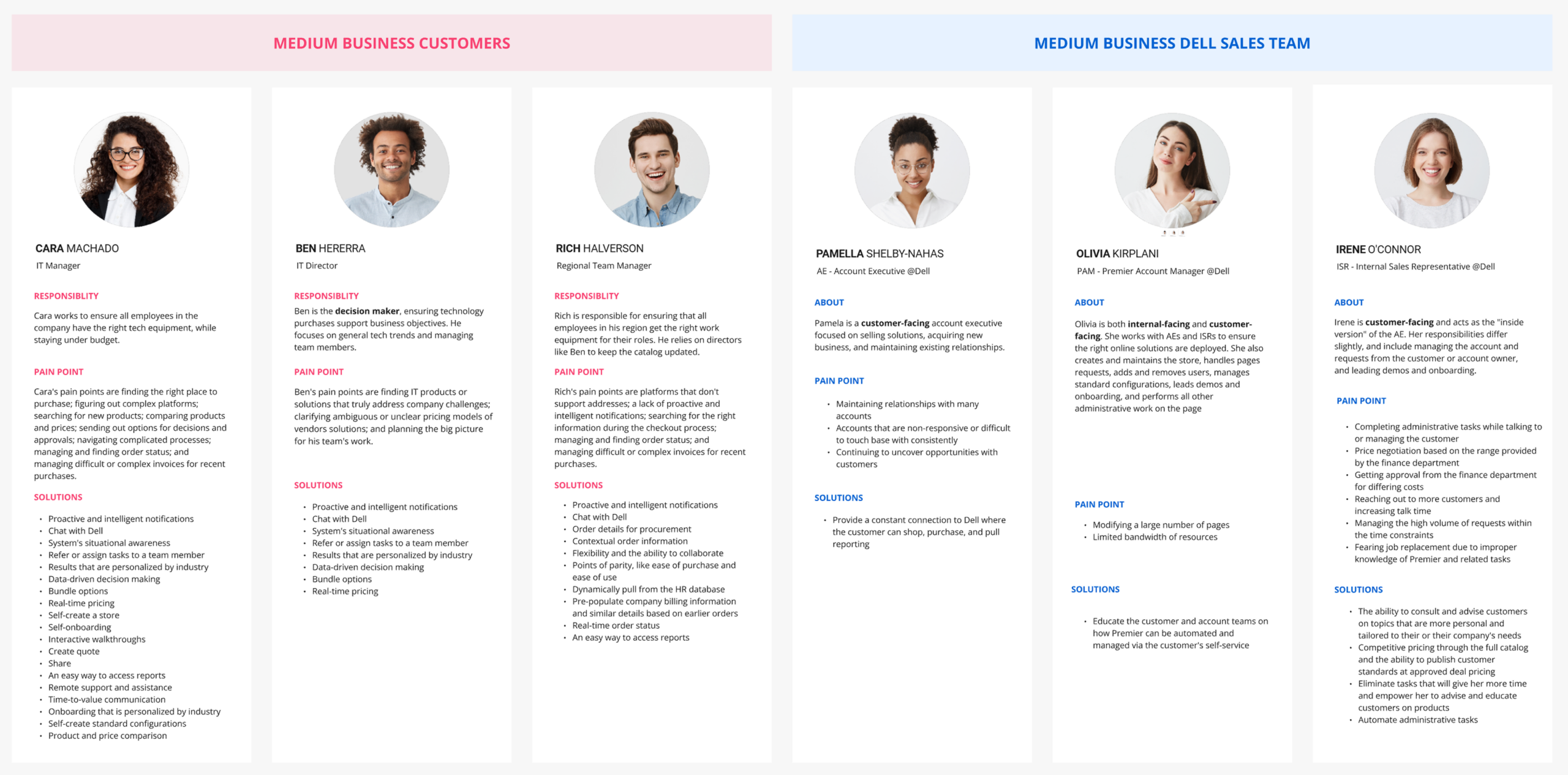
I ran a four-part remote workshop series with stakeholders across sales, product, and engineering, with one clear goal: surface real opportunities and pressure-test them while there was still room to change direction.
We walked out with a list of prioritized initiatives and a north star vision we could actually build toward.
What came out of it:
- Aligned 12+ stakeholders across sales, product, and engineering on a shared problem space.
- Surfaced and validated customer pain points directly from the people closest to them.
- Identified over 20 opportunities and prioritized the 6 highest-impact initiatives.
- Defined a north star vision to guide phased implementation.
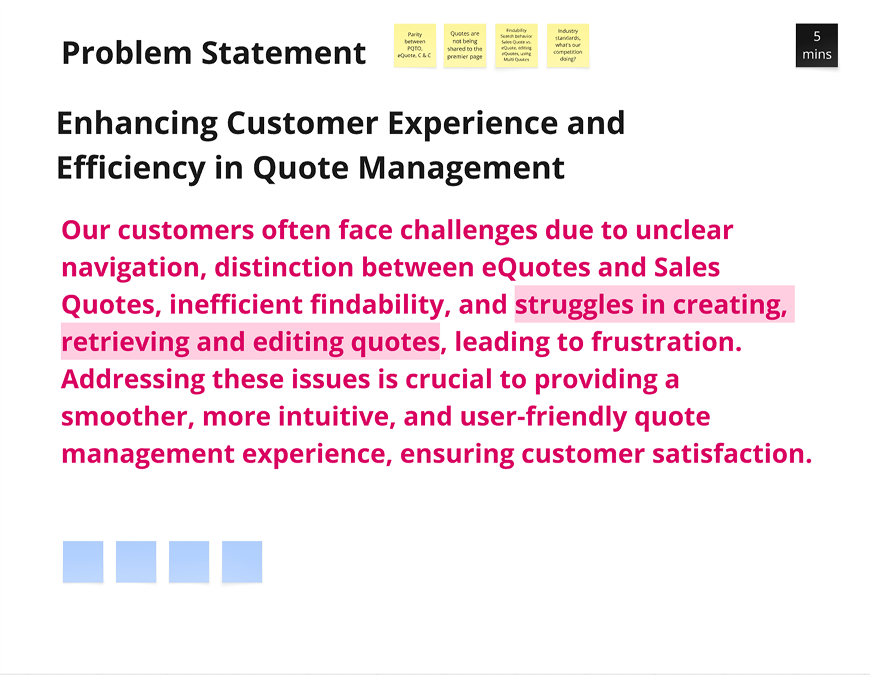
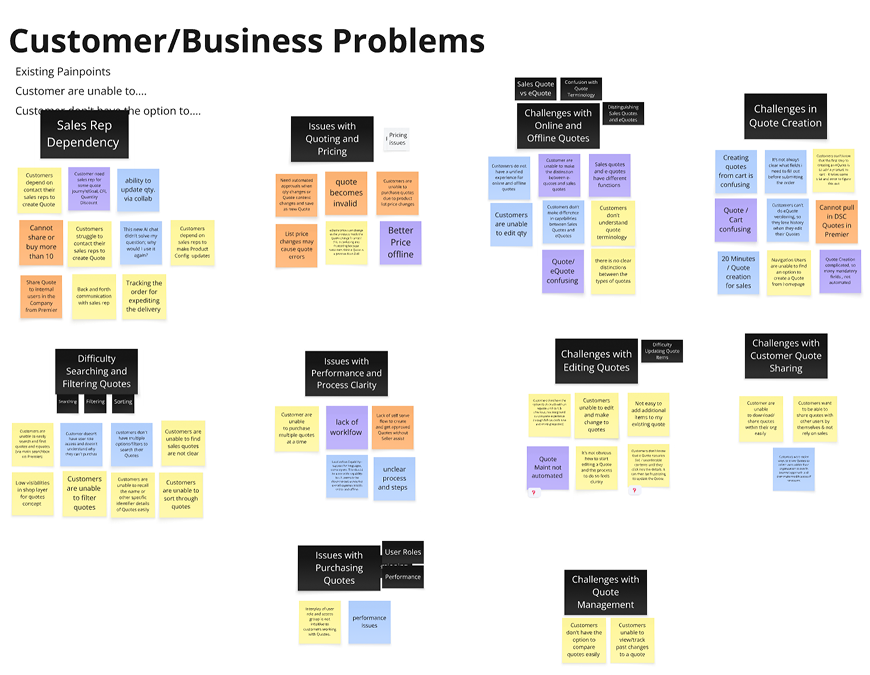
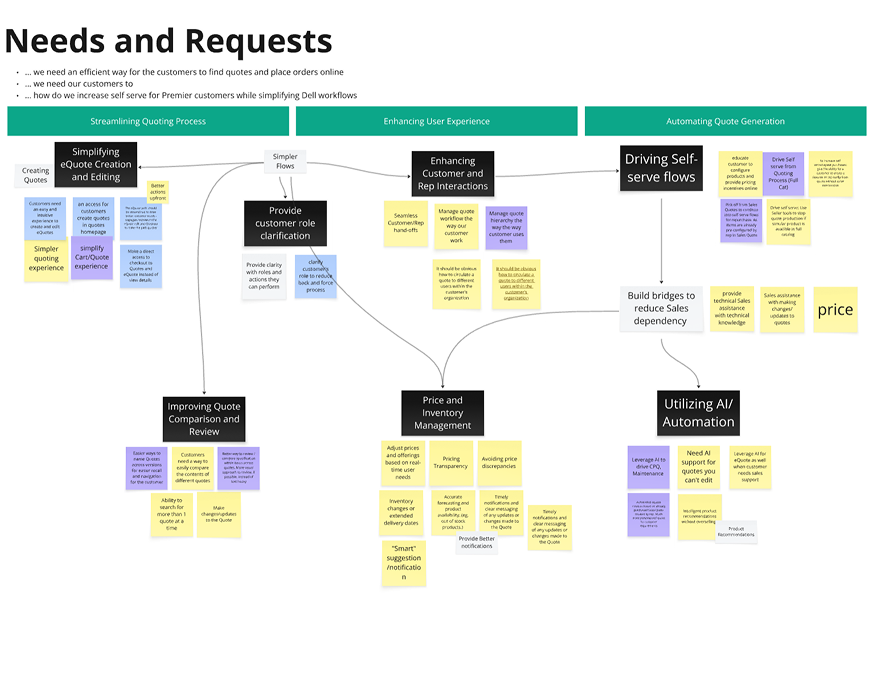
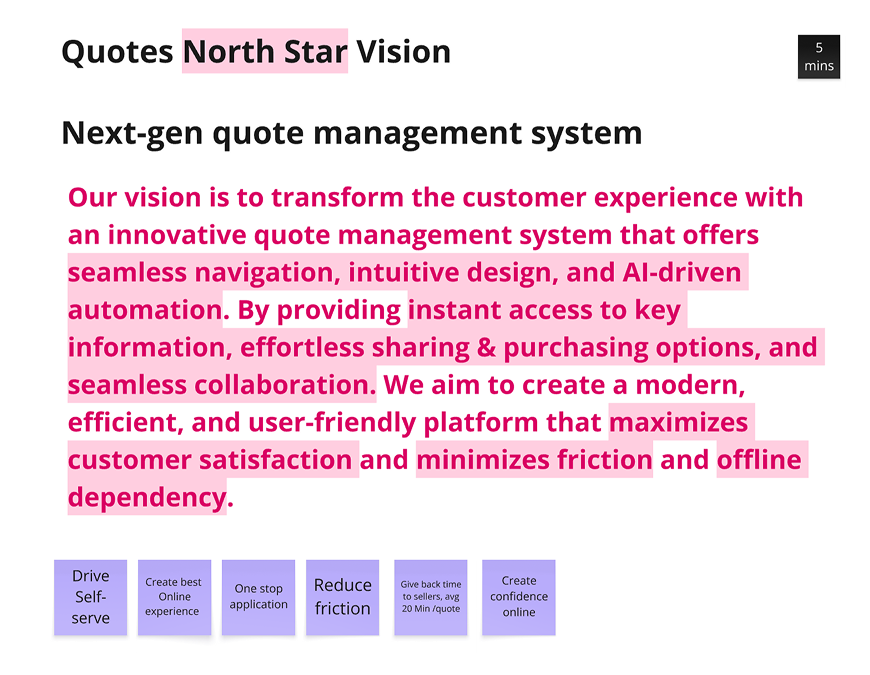
Four-part workshop series: Problem framing → Customer needs → Opportunity prioritization → Vision alignment
End-to-End Quote Journey
The workshop gave us alignment, but not specifics.
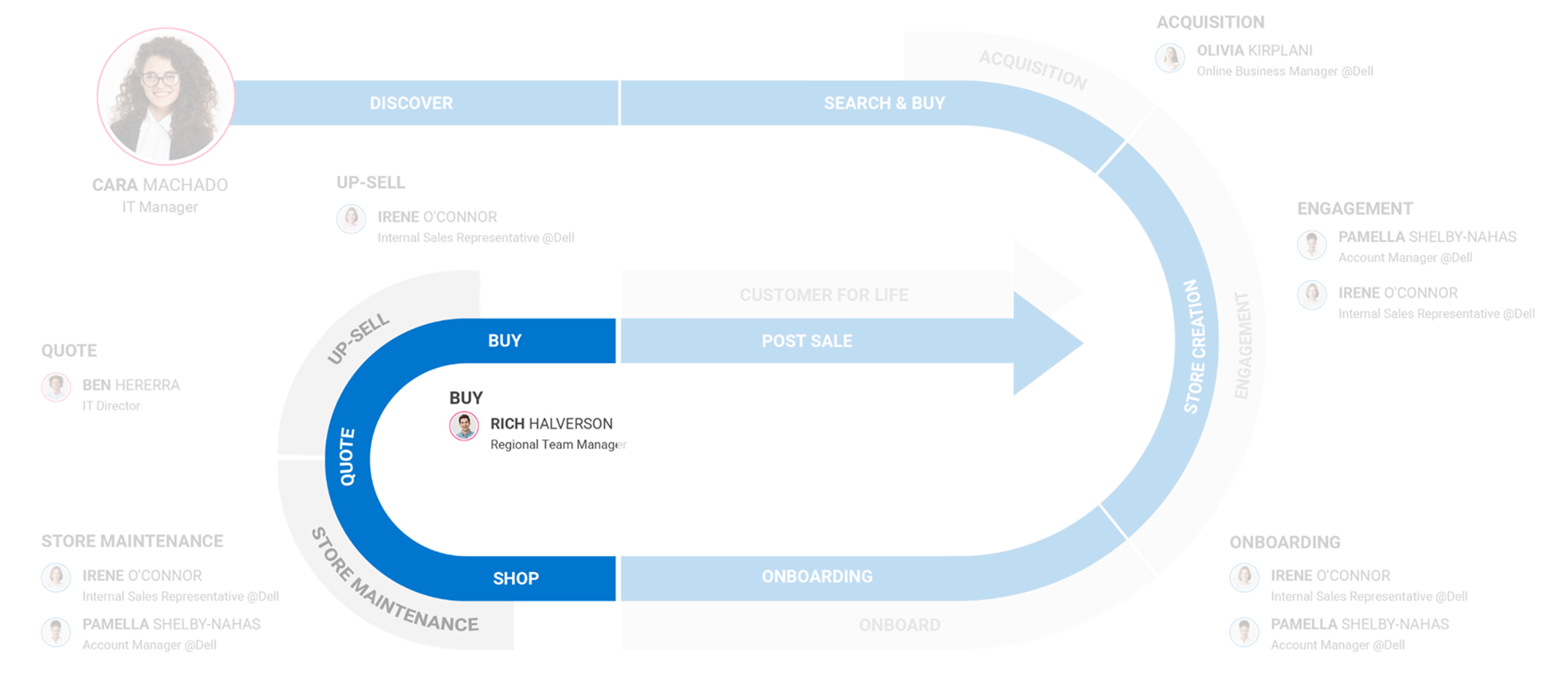
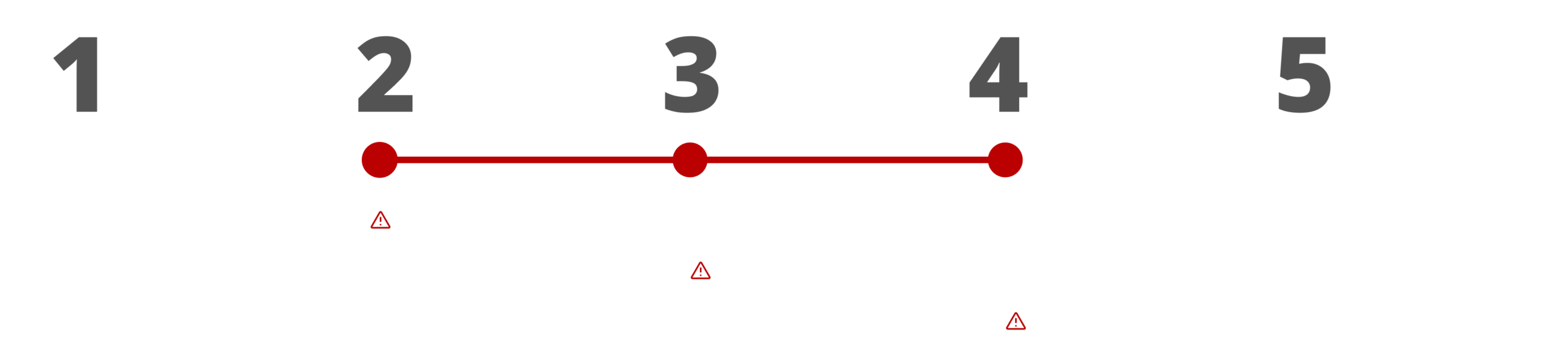
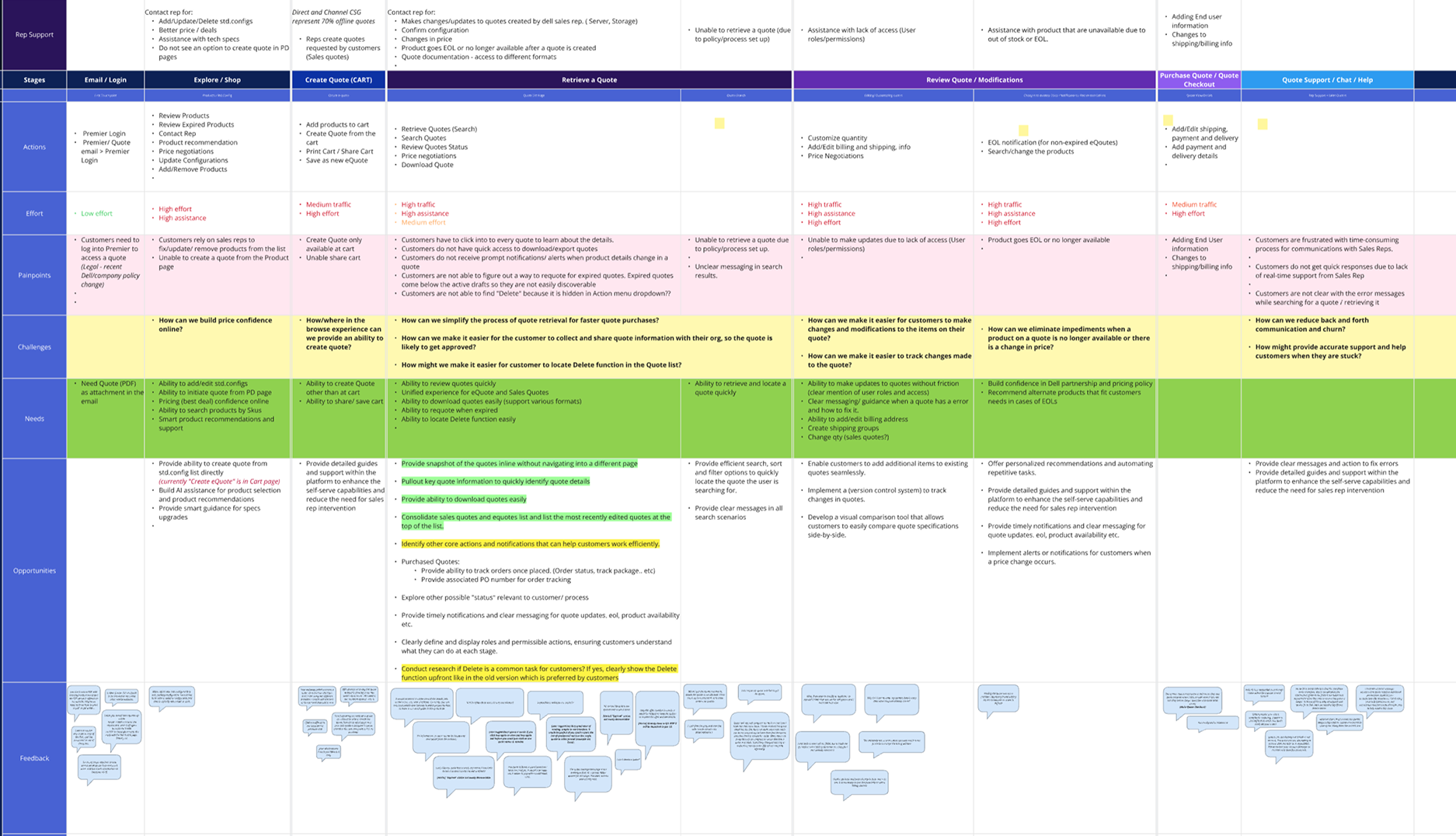
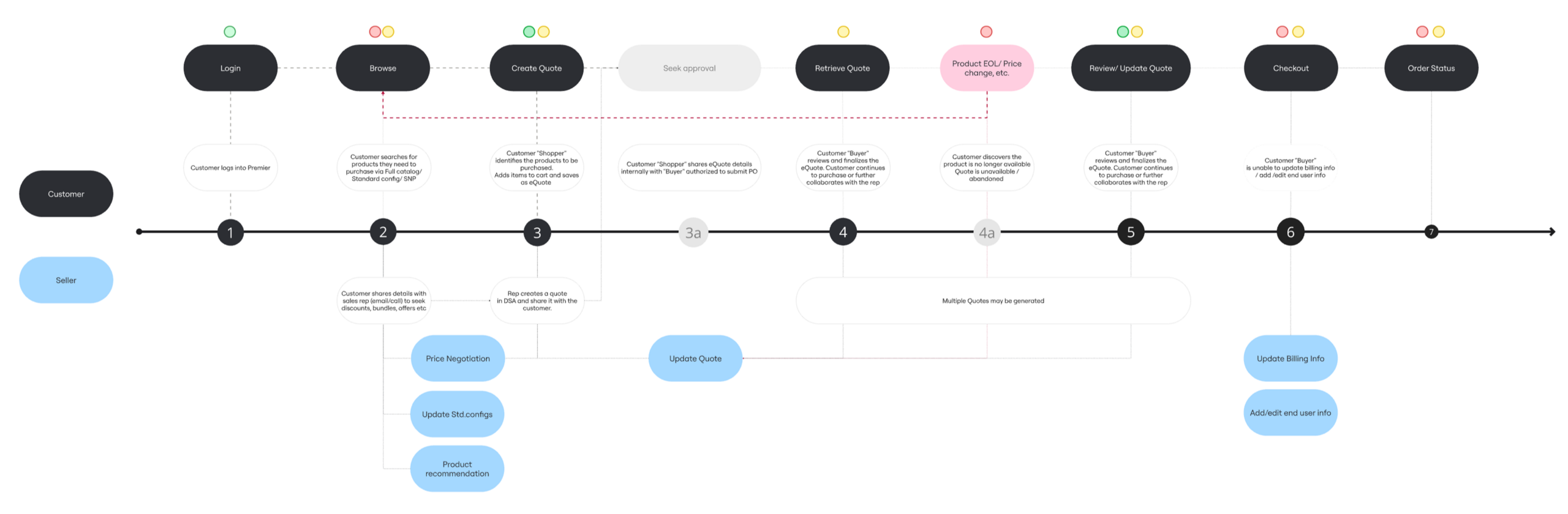
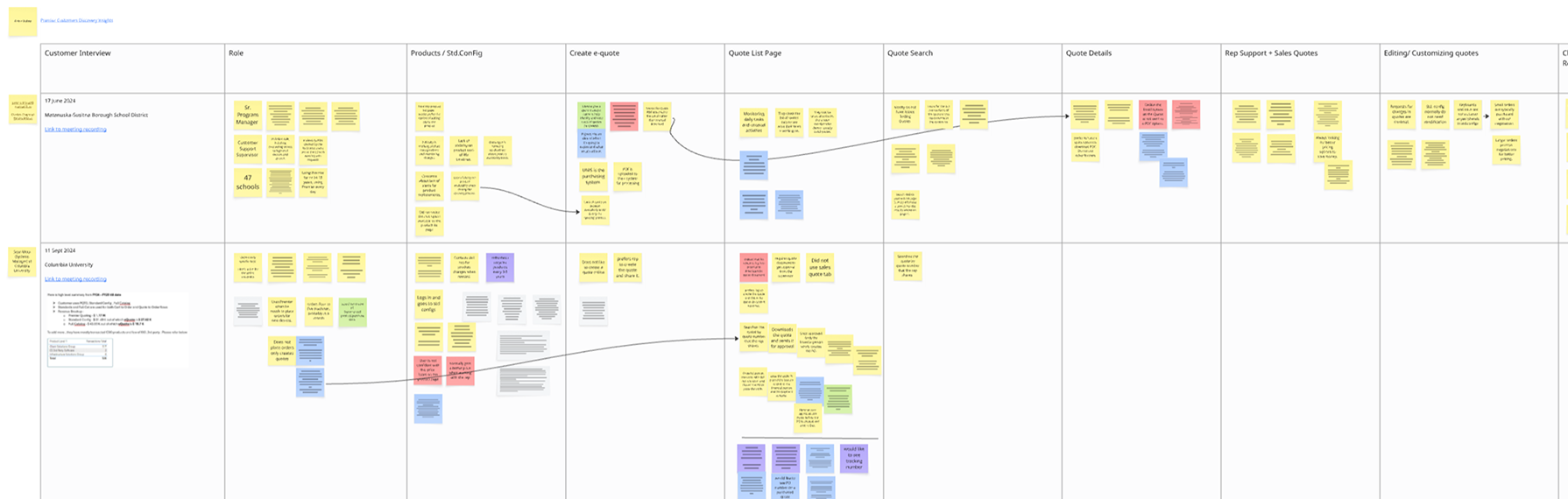
I mapped the full quote-to-order journey across five stages, from discovering a quote to converting it to an order, to find exactly where customers were falling off.
The data pointed to a clear breakdown: 72% of customers abandoned between the approval and resolution stages; not at entry, not at checkout, but at the point where complexity peaked and the interface provided no guidance.
What We Learned
The research kept pointing to the same three problems.
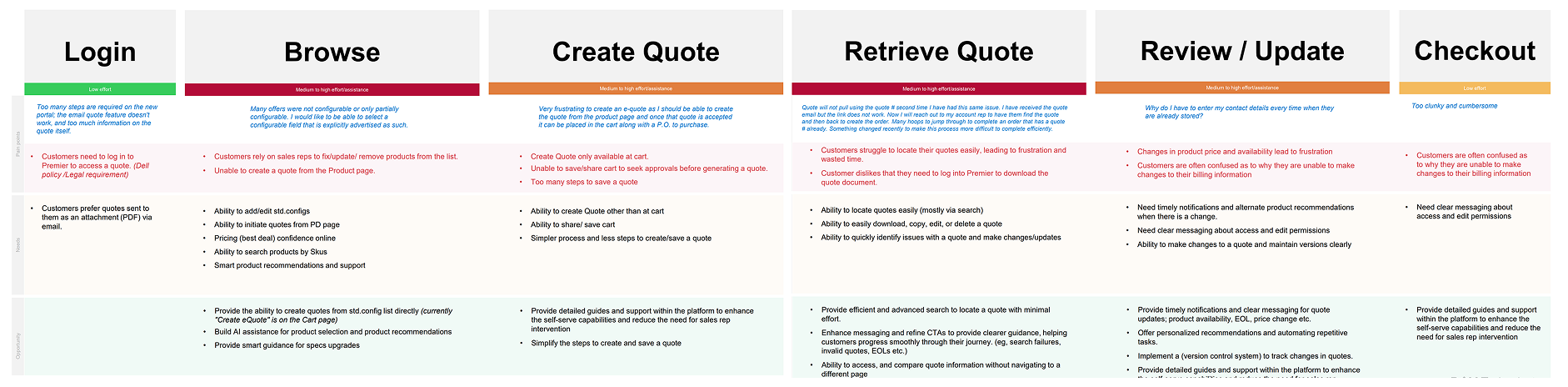
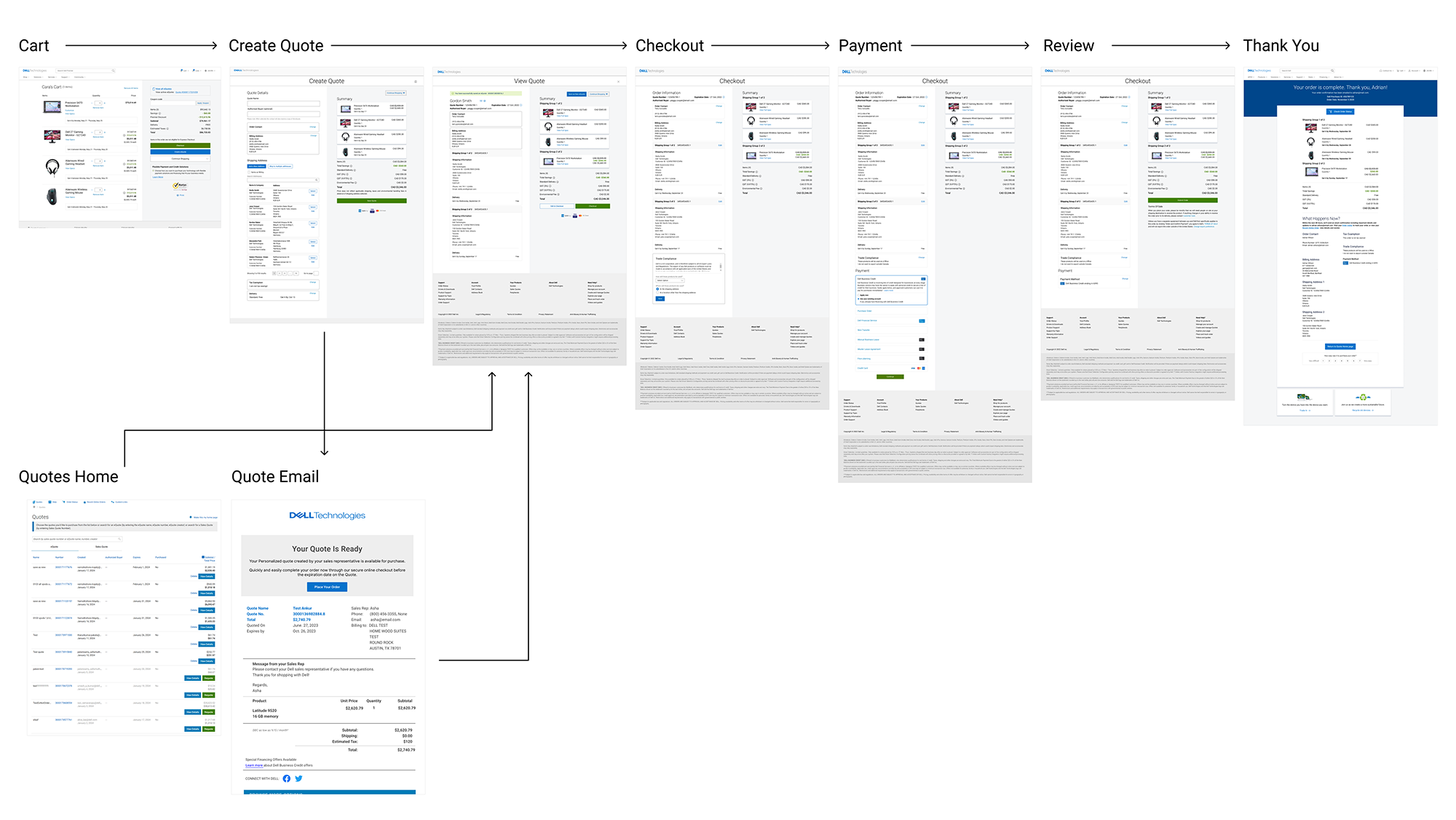
- Customers weren’t thinking in terms of quotes; they were thinking in terms of progress. They wanted to know where they were in the buying process, not see a flat list of document IDs.
- Friction wasn’t random; it clustered. 68% of support calls occurred during review, approval, and order, the same three stages where the interface provided the least guidance.
- The online experience was actually slower than calling a rep, which is the opposite of what customers expected and what Dell needed.
Customers had no single place to understand their status and know what to do next.
Roadmap
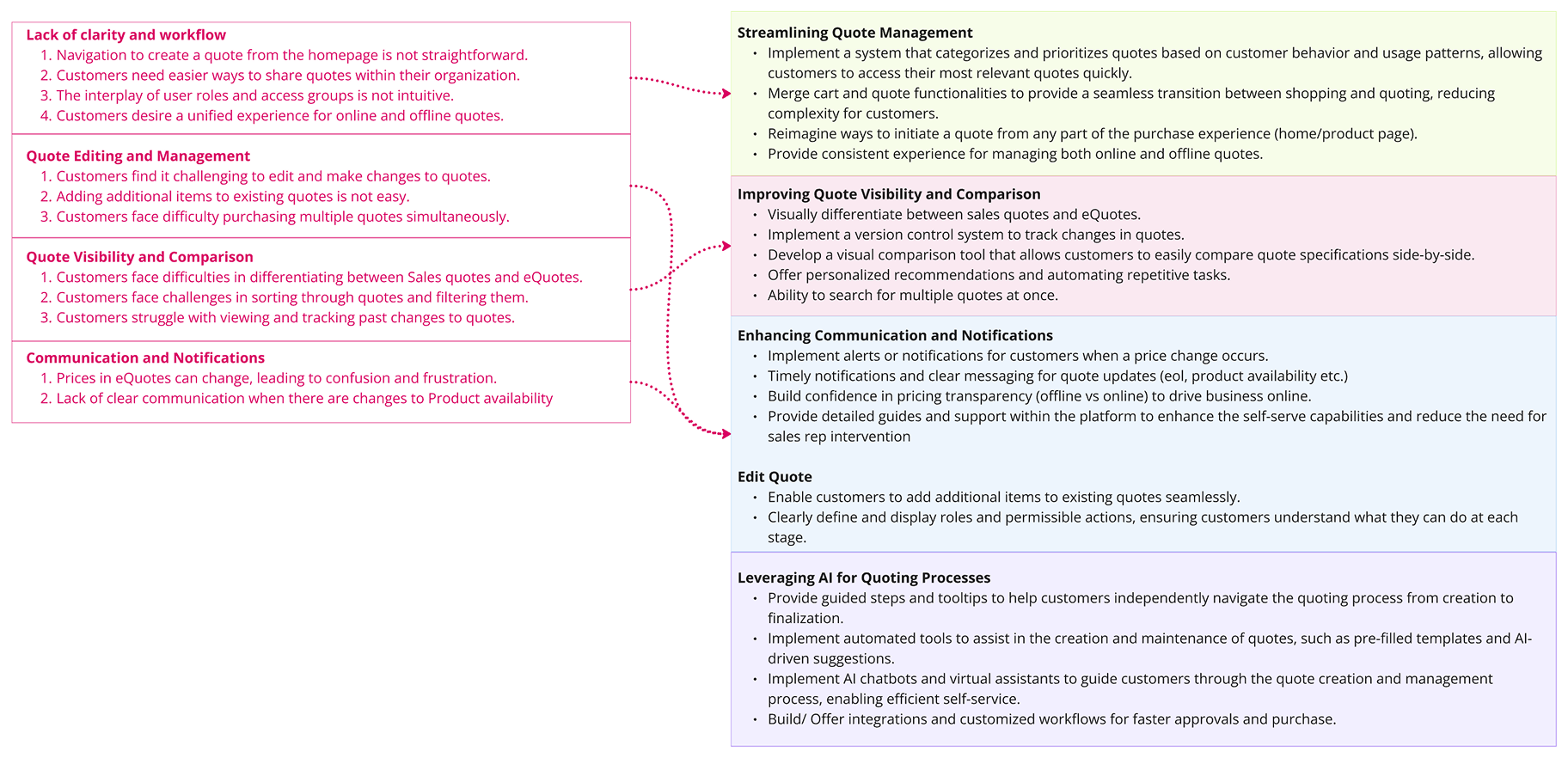
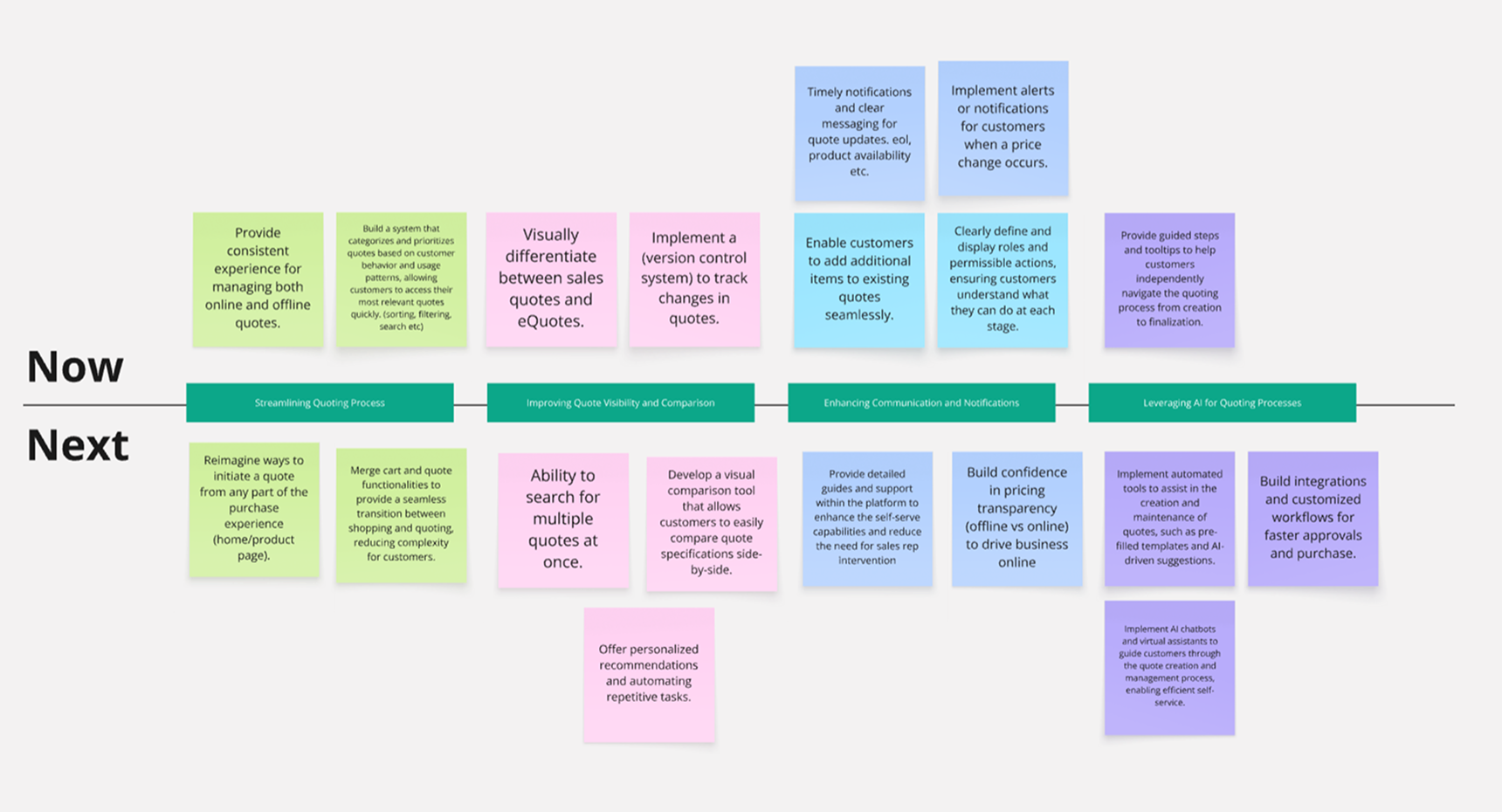
We organized everything we learned into a phased roadmap, not to defer hard decisions, but to sequence them in a way that let us ship real value quickly without breaking revenue-critical workflows.
Now (0-6 months)
- Centralized quote dashboard
- Clear status indicators
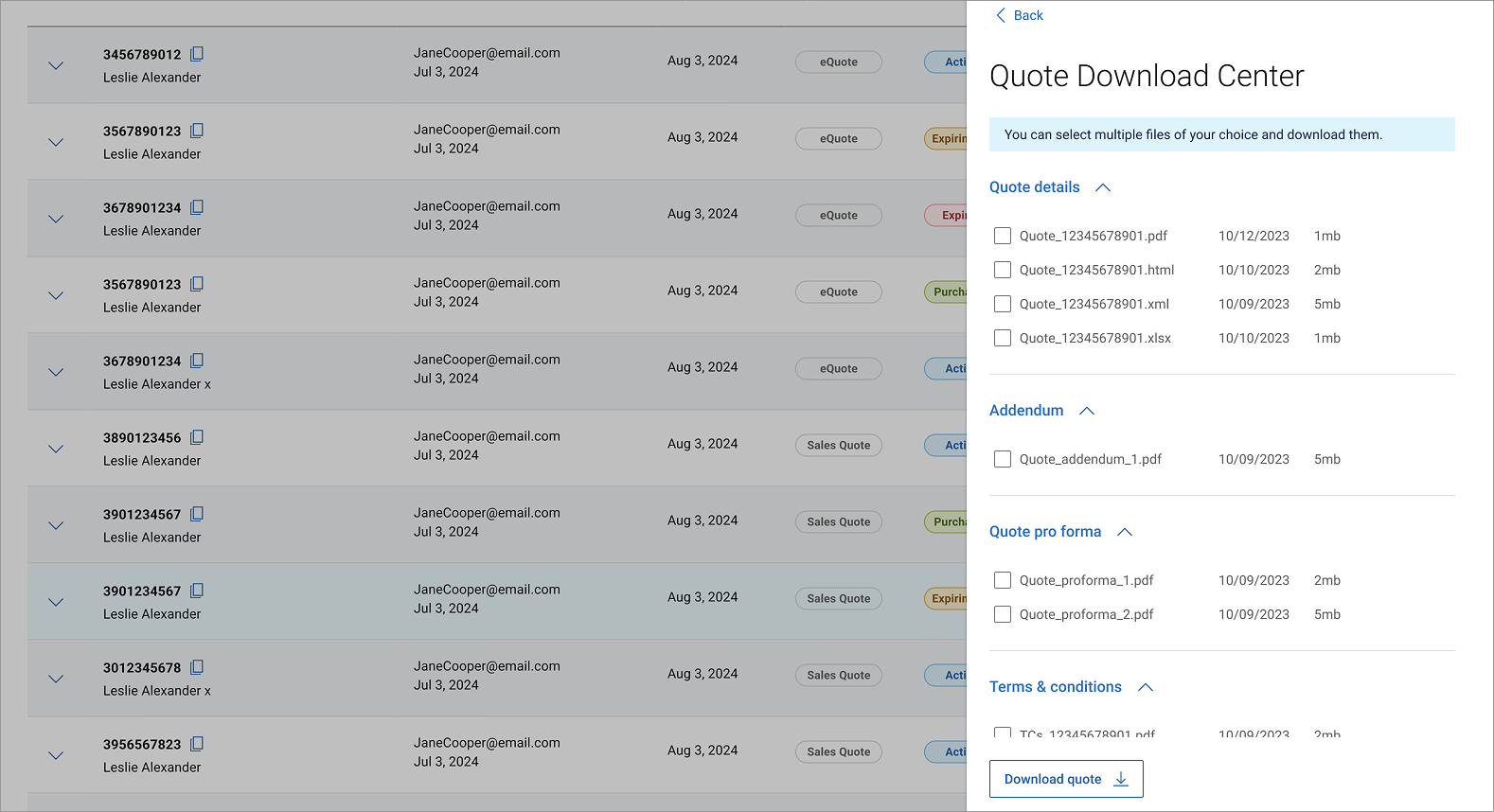
- Bulk document downloads
Next (6-12 months)
- Version control for quotes
- Real-time notifications
- Enhanced filtering/search
Future (12-24 months)
- AI-powered recommendations
- Unified cart + quote model
- Predictive approval routing
Design Approach
Based on those insights, I reframed the Quote Homepage from a static entry point into a centralized control center for quote management.
Every iteration was tested against one question: can a customer tell what’s happening with their quotes and what to do next, without calling anyone?
What the testing process looked like:
- Ran multiple rounds of usability testing to validate assumptions and surface friction points.
- Refined navigation and task flows iteratively based on observed behaviors and direct feedback.
- Simplified decision paths and sharpened next-action clarity through each design pass.
What it showed:
- Sustained improvements in task clarity and error reduction.
- Faster task completion across user groups.
- Increased confidence in navigating and acting on quotes independently.
Quote Homepage Redesign
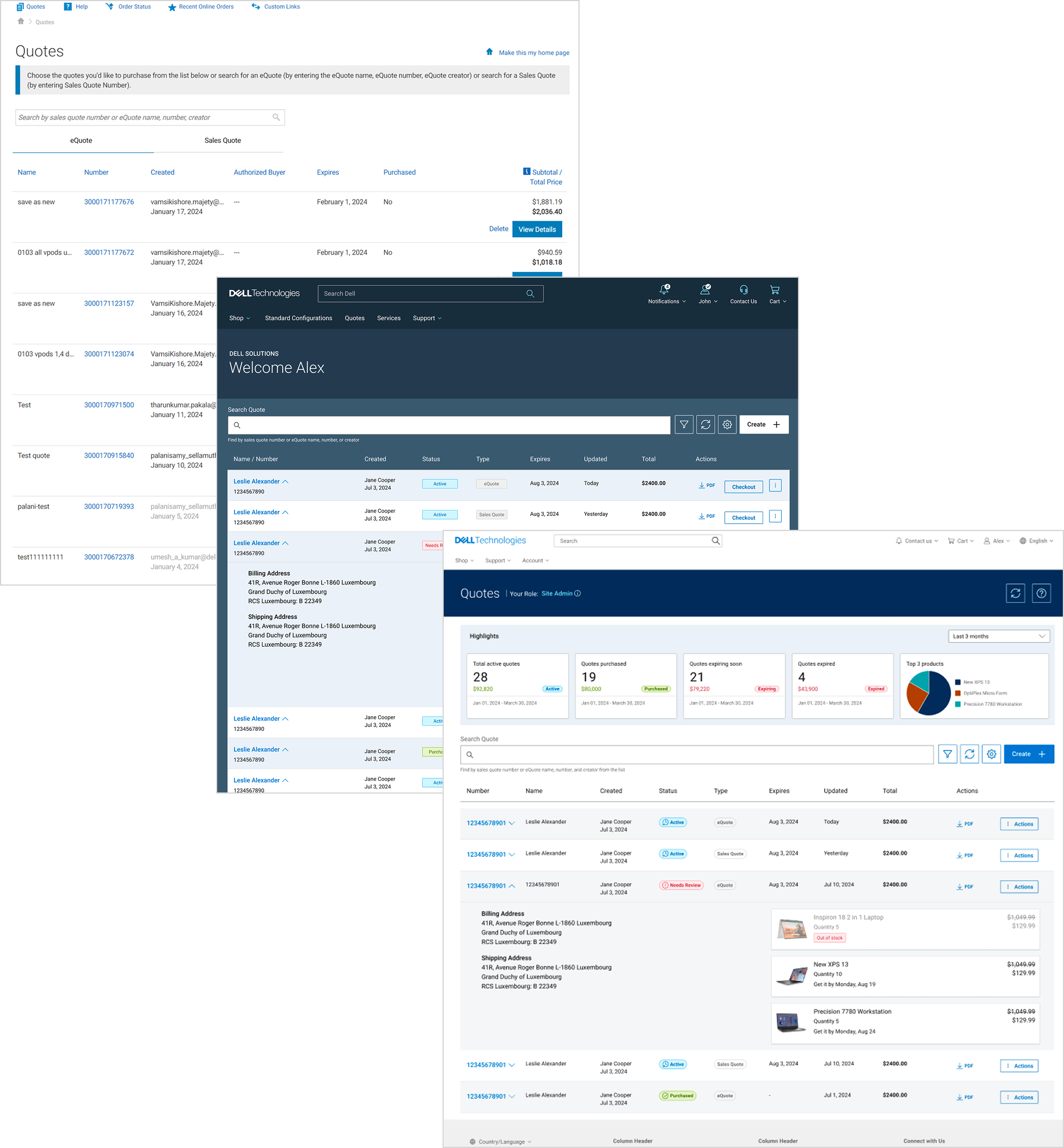
The Quote Homepage was redesigned as a unified, self-serve control center that scales to higher quote volumes and supports multiple user roles.
Key features:
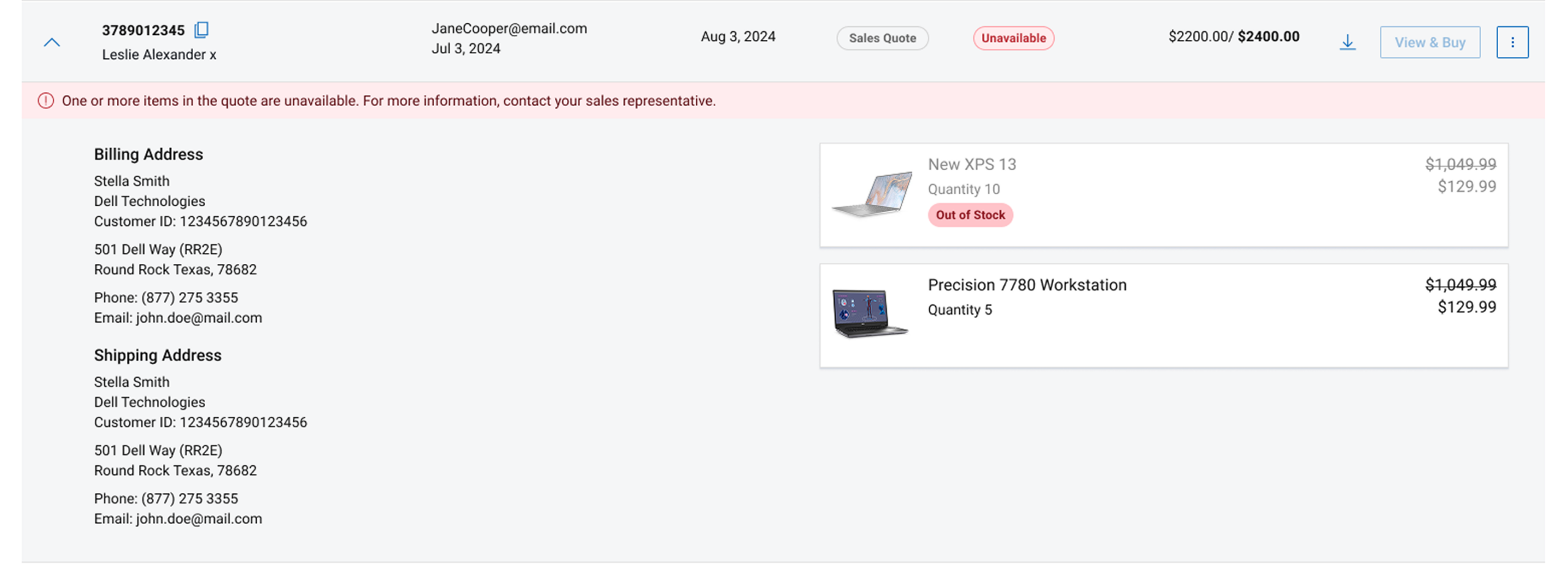
- Snapshot view: Quote details, documents, and actions in one place.
- Reduced redirects: Customers navigated 47% fewer pages to complete the same tasks.
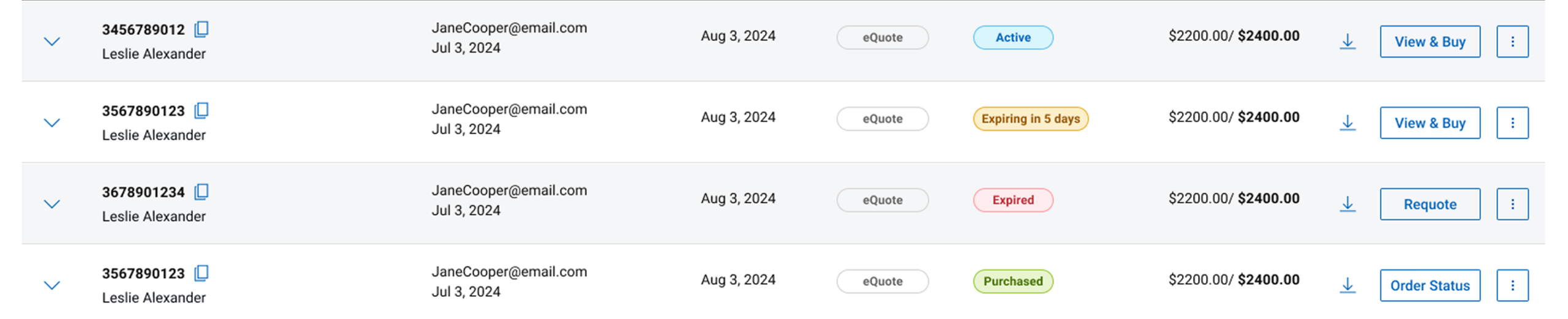
- Clearer status: Visual indicators for active, expiring, and error states.
- Bulk actions: Download multiple documents at once.
Impact on workflows:
- Reduced internal friction by standardizing quote management workflows.
- Laid the foundation for expanding digital quoting and ordering across the end-to-end purchase journey.
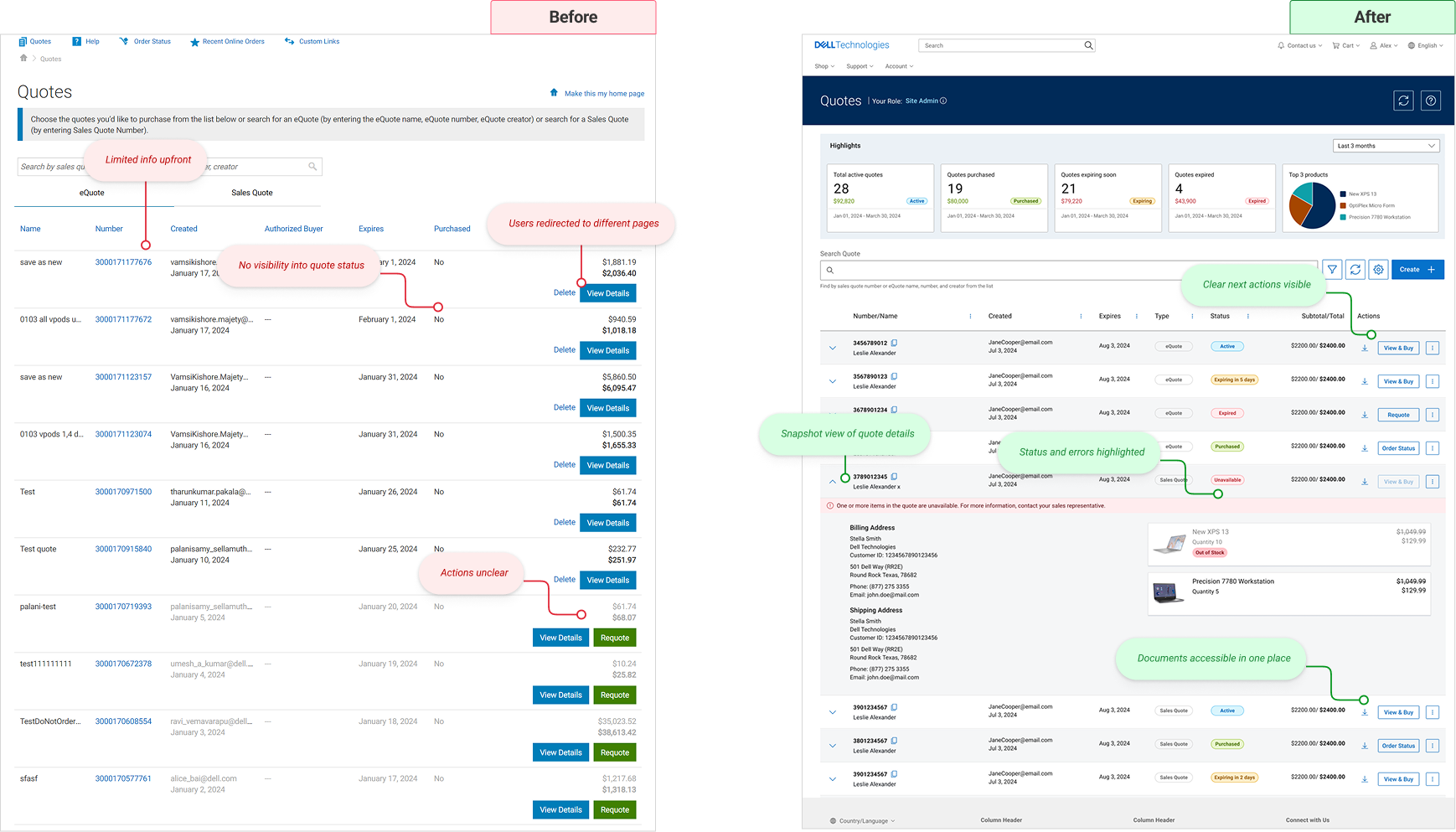
The redesign surfaces all of it in one place.
Roadblocks & Constraints
Rigid business processes:
Revenue-critical quote and approval workflows limited how much the experience could change without operational risk.
Fragmented ownership:
Quoting, pricing, approvals, and ordering were split across teams, slowing end-to-end alignment.
Online vs. offline gaps:
Many key quote actions still require sales or offline steps, limiting full self-serve progression.
Platform constraints:
Legacy services and APIs required solutions that fit existing data models and performance limits.
Data quality and consistency:
Quote data came from multiple systems, complicating efforts to present a single source of truth.
Scalability vs. customization:
Stakeholders pushed for customization while long-term success depended on standardized patterns.
How I navigated them
- Partnered with engineering early to understand technical limits.
- Created a phased roadmap prioritizing high-impact, low-risk changes.
- Aligned stakeholders through workshops and regular design reviews.
- Built a flexible design system supporting both standard and custom needs.
Design Outcome
The redesign shipped in phases. By the end of the measured period, online quote conversion had grown from 8% to 14% year-over-year, frictionless transaction rates had reached 84%, and CSAT had improved by 140 basis points. The platform processed $7.7B in quarterly revenue – up 141% year-over-year.
Design wasn’t the only driver of that growth, but the shift toward self-serve directly enabled the scale.
14%
Conversion from 8% YoY
Online quotes
$7.7B
Quarterly revenue
+141% YoY growth
820.8K
Quarterly transactions
+66% YoY increase
84%
Frictionless
+6.8% YoY improvement
+140 bps
CSAT
Higher customer satisfaction
Future State: Next-Gen Quote Management
Shipping the redesign wasn’t the finish line; it was proof of concept. If customers would engage with self-serve when the experience was clear enough, the next question was: how far could that go?
The long-term vision moves quotes from static documents into a dynamic, AI-powered purchase experience — one that meets customers where they are, not where the system expects them to be.
Where this goes next:
- Quote Anywhere
Meet customers in the context they’re already working in - Unified Cart + Quote Model
Collapse the gap between browsing and committing - AI-Powered Intelligence
Surface the right action at the right moment, automatically
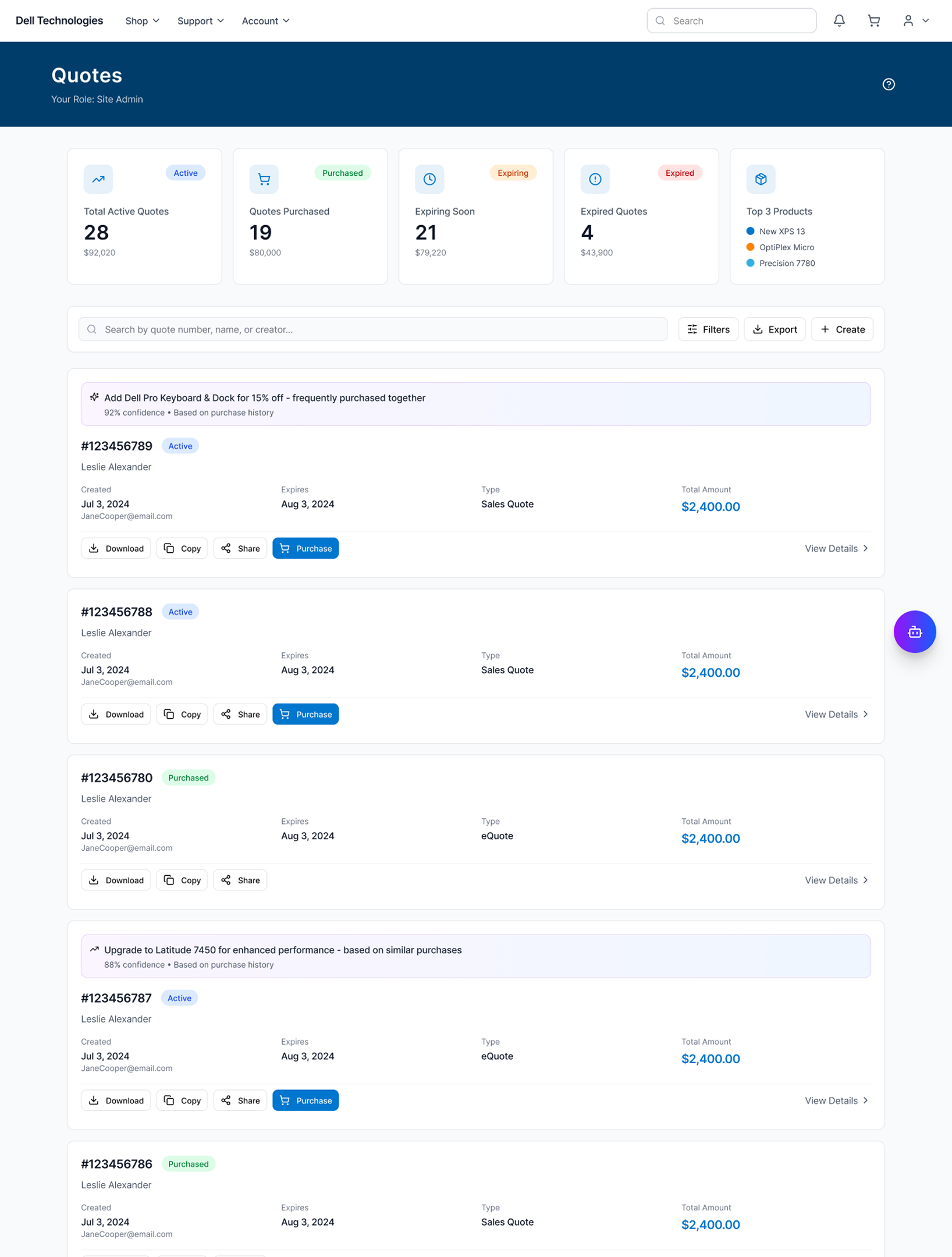
Quote Anywhere
Starting a quote shouldn’t require navigating to a separate system. The goal is to make quoting a contextual action rather than a destination.
- Start or convert a quote from the homepage, a product page, the cart, or an existing quote.
- Remove forced navigation between cart and quote systems.
- Preserve user intent across the entire purchase journey.
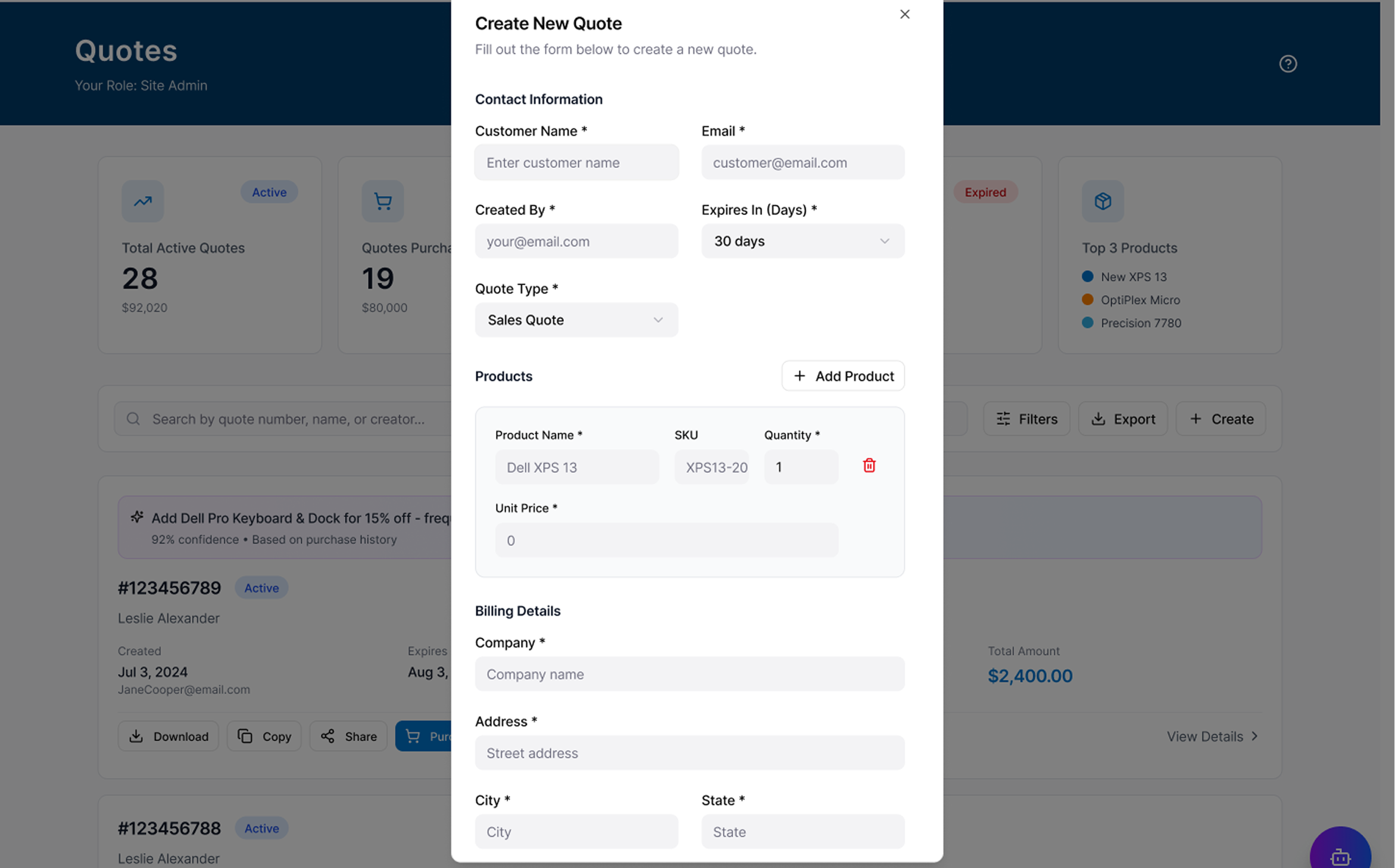
Unified Cart + Quote Model
Right now, shopping and quoting live in separate systems, and customers feel every bit of that friction.
- Merge cart and quote workflows into a single, adaptable transaction layer.
- Enable seamless transitions between exploration, pricing, negotiation, and ordering.
- Reduce friction caused by duplicate systems and manual reconciliation.
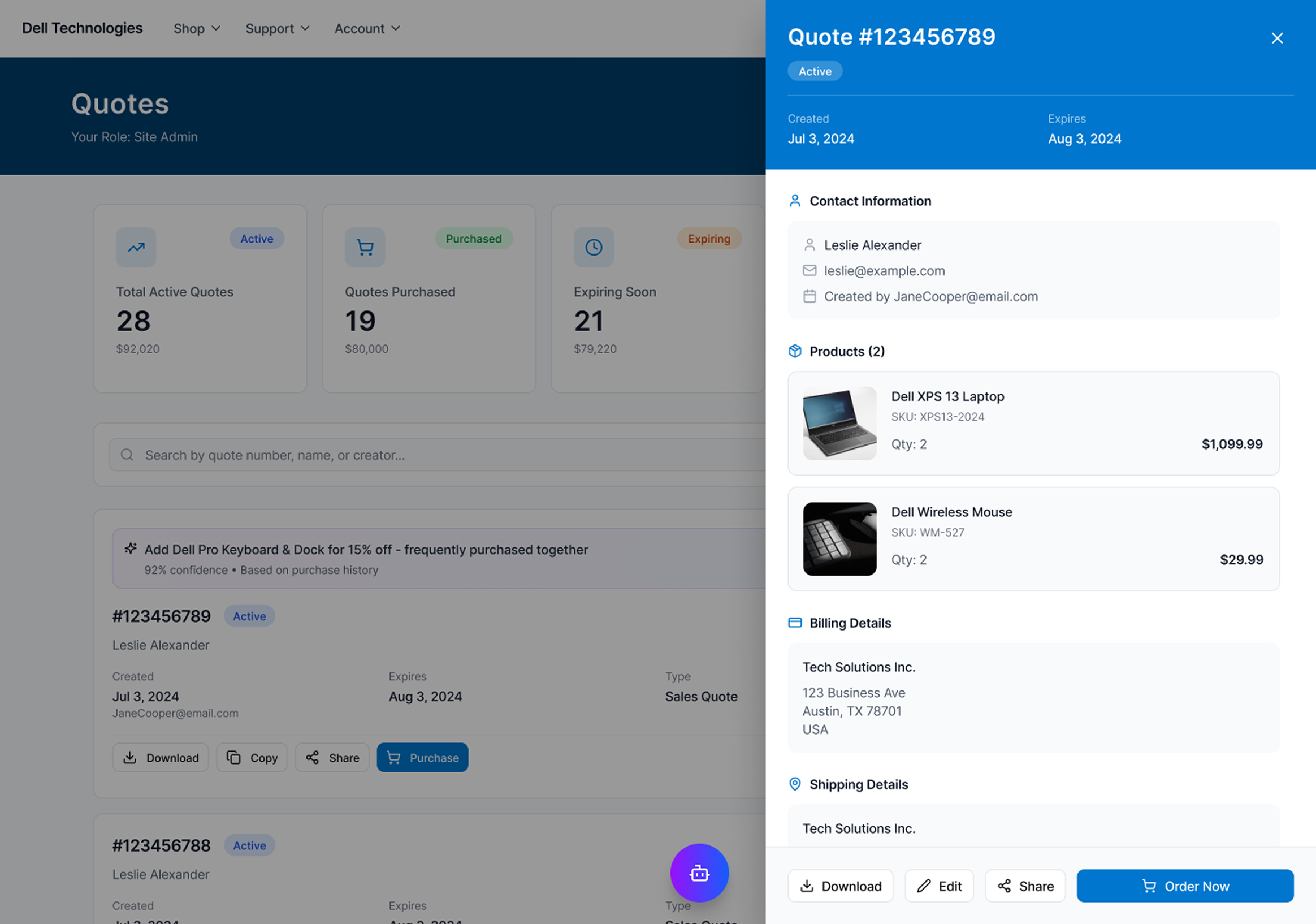
AI-Powered Intelligence
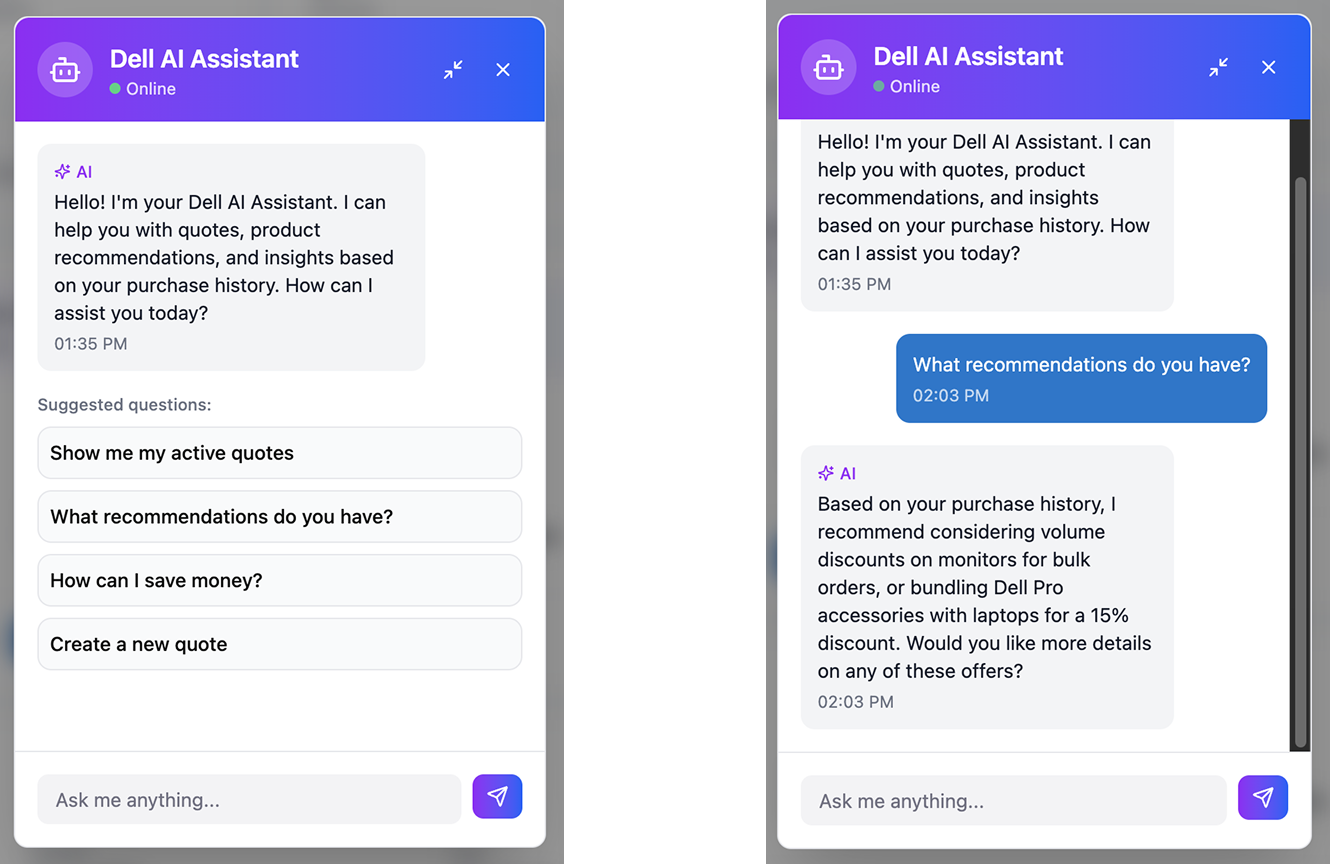
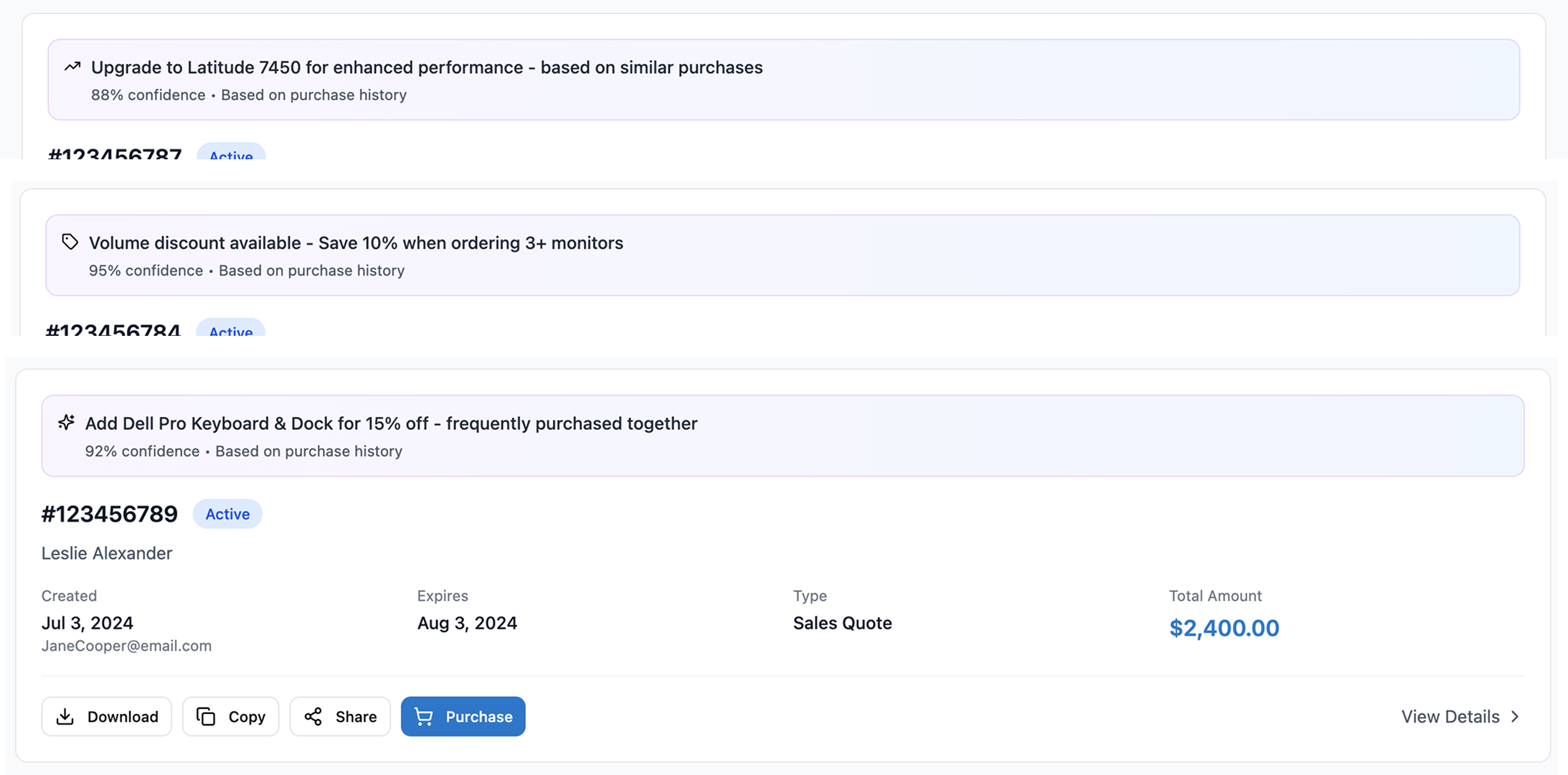
The opportunity isn’t a chatbot bolted on; it’s intelligence woven into the workflow itself.
- Personalized recommendations surface at the right moment, based on purchase history and deal patterns.
- Automated pre-fill, validation, and repetitive task reduction.
- Predictive approval routing and risk detection.
- Context-aware guidance that accelerates quote-to-order progression.
Reflections & Learnings
Constraints Breed Creativity
Working within legacy systems forced me to prioritize high-impact, low-risk solutions, ultimately leading to faster adoption.
Data Tells the Story
Leading with metrics (33% online conversion vs 13% offline) helped secure buy-in for the self-serve vision.
Alignment is Design Work
Facilitating workshops and building stakeholder consensus was as critical as the UI design itself.
Design for Today, Plan for Tomorrow
Balancing near-term needs with long-term vision ensured we shipped value quickly while setting up future innovation.
If you want to talk through the decisions behind any of it, or what I’d do differently, I’d love that conversation.
Thank you for your time!
Other Projects

- Vision
- Strategy
Dell Design System Governance Engine

- Vision
- Strategy
Shaping an AI Experience Vision Through System-Level Exploration
- Strategy
- Systems Thinking