Introduction
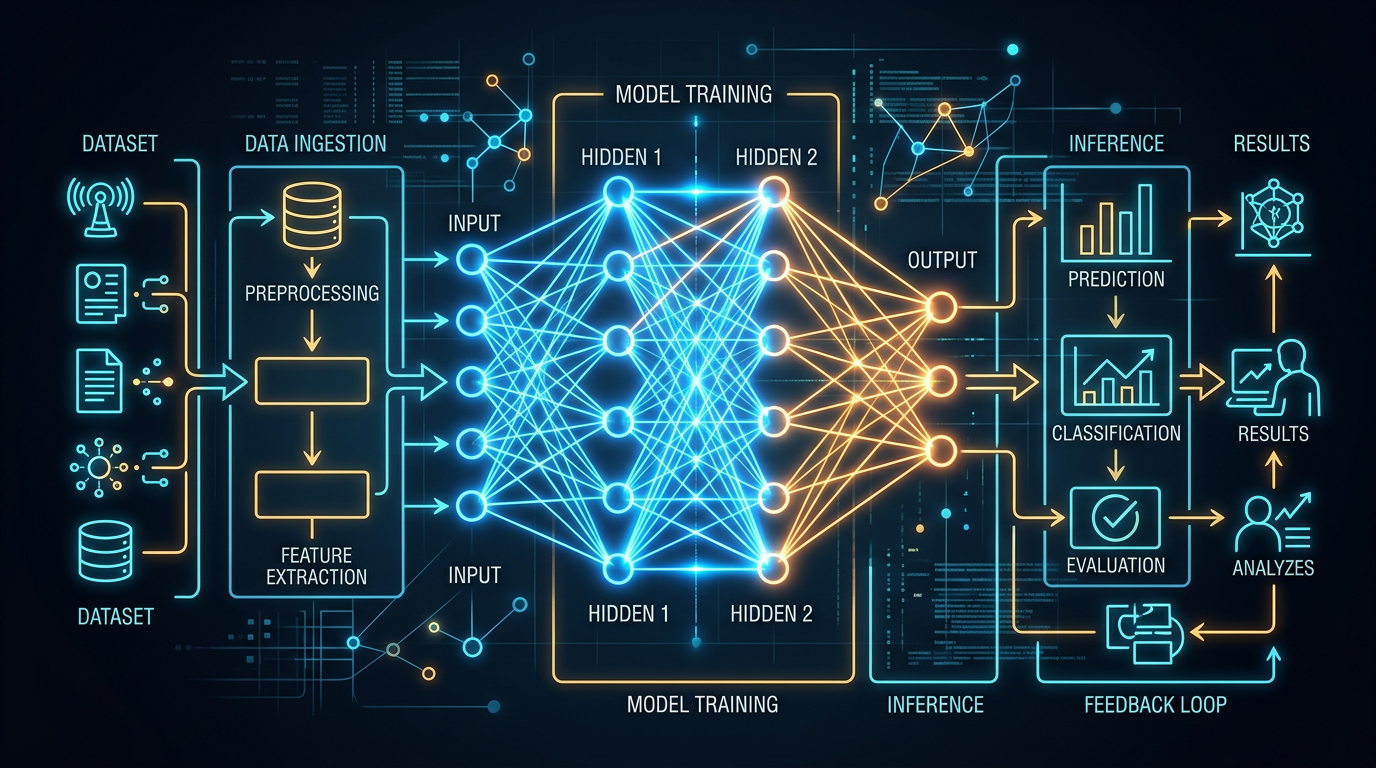
2024 marked a shift from AI experimentation to real business adoption, as highlighted in McKinsey’s The State of AI in Early 2024. The Cosmos initiative at Dell Technologies is a strong example of what the transitions look like in practice. Cosmos was a machine-learning and predictive analytics initiative designed to improve demand planning and supply-chain decision-making. The project demonstrated the complexity involved in transforming AI from a conceptual innovation into an operational enterprise system.
Organizational Context and AI Initiative Description
Dell launched the Cosmos initiative in 2024 to modernize pricing, demand forecasting, and supply chain operations. While forecasting was one of the primary business goals, the broader challenge Cosmos aimed to solve was the fragmentation of operational data across disconnected systems. Forecasting and sales planning information was often distributed across spreadsheets, locally managed files, and multiple enterprise tools, limiting leadership visibility into inventory, pricing, forecasting, and market conditions.
Before Cosmos, forecasting relied heavily on annual planning cycles centered around Dell’s internal product strategy. However, AI-driven forecasting requires continuous access to real-time operational and market data to adapt to changing business conditions. The initiative was intended to shift the organization from reactive planning to more dynamic forecasting, supported by machine learning and real-time operational inputs.
Unlike traditional software systems with predictable outputs, Cosmos needed to continuously evaluate changing market trends and external business conditions. For example, the models needed to analyze competitor pricing changes, promotional activity from companies such as HP, inventory availability, supply chain constraints, shipping capacity, and the impact of these variables on profit margins.
To support these changing conditions, Cosmos required continuous forecasting updates, automated alerts, and recommendation systems that notified operational teams when risks or significant changes were detected. This created a substantially different operating model from a traditional enterprise software implementation, as the system needed to learn, adapt, and refine its predictions over time.
Human oversight remained critical throughout the process. Although the models could identify patterns and generate forecasting recommendations at scale, experienced operational and business teams were still responsible for validating whether recommendations aligned with real-world business conditions and market intuition. This combination of machine learning and human judgment reflects a core principle within the NIST AI Risk Management Framework (AI RMF), which emphasizes governance, monitoring, and accountability throughout the AI lifecycle.
Methodology Selection and Justification
Several AI project management methodologies could support an initiative like Cosmos, including CRISP-DM, TDSP, and CPMAI combined with MLOps practices. Based on the course readings and the initiative’s operational complexity, a CPMAI and MLOps hybrid approach appears to be the strongest fit for managing an enterprise forecasting system that depends on real-time operational and market data.
CRISP-DM provides a strong framework for structured data science work, with phases including business understanding, data preparation, modeling, evaluation, and deployment. It is especially useful for exploratory modeling and analytics development. However, according to the Data Science Project Management Frameworks reading, CRISP-DM is less focused on long-term operational governance and enterprise-scale AI management. While effective for building models, it provides limited structure for ongoing post-deployment management.
For Cosmos, the challenge extended beyond building forecasting models. The system depended on continuously changing variables, including competitor pricing, inventory levels, shipping constraints, seasonal demand, and supply chain disruptions. As a result, the models required continuous monitoring, retraining, and operational oversight after deployment.
A CPMAI and MLOps hybrid approach addresses both technical and operational requirements. CPMAI emphasizes governance, business alignment, stakeholder communication, and organizational readiness, while MLOps supports continuous model monitoring, retraining, deployment automation, and performance management.
This methodology could also help address one of the major operational challenges within Cosmos, which was fragmented information and unclear data ownership across teams. Forecasting and planning data were spread across different systems and manually maintained spreadsheets with inconsistent ownership and visibility. This limited organizational alignment and slowed decision-making.
From a product and design perspective, one challenge in large enterprise initiatives is ensuring that teams not only work from the same data but also interpret priorities consistently. A governance-focused methodology such as CPMAI could improve cross-functional alignment through clearer ownership structures, standardized reporting, and stronger collaboration between operations, planning, engineering, and business teams. When combined with MLOps practices, this approach could also enable faster execution through more reliable data pipelines, continuous monitoring, and faster feedback loops.
One limitation of applying a CPMAI and MLOps approach in a large enterprise environment is that the governance process can sometimes slow down decision-making. To address this, organizations could combine formal governance with agile delivery practices such as shorter iteration cycles, recurring stakeholder reviews, and faster feedback loops to maintain both flexibility and operational oversight.
Governance and Team Structure
Effective governance and team alignment were critical to the success of the Cosmos initiative. The project required close collaboration across data science, engineering, supply chain planning, operations, product management, and business leadership teams. Data scientists and engineers focused on model and product development, and on monitoring, while operational and planning teams provided the business context needed to validate forecasting outputs against real-world conditions. Product and program managers coordinated priorities, communication, and execution across teams.
Overall, Cosmos was a balanced cross-functional initiative, but, like many enterprise transformation projects, it faced challenges with prioritization and alignment. Different business groups often had competing priorities, and evolving operational requirements frequently introduced scope changes during the project lifecycle. These changes made it more difficult for technical teams to maintain alignment on delivery timelines, implementation priorities, and forecasting logic.
The NIST AI RMF provides a useful structure for managing these challenges through ongoing governance and communication practices. One governance practice especially relevant to Cosmos would be recurring cross-functional review meetings aligned with the framework’s “Govern” function. These reviews could help teams evaluate changing business priorities, assess operational risks, align on feature prioritization, and maintain visibility across technical and business stakeholders.
A second important governance practice would involve continuous model monitoring aligned with the framework’s “Measure” and “Manage” functions. Because Cosmos relied on continuously changing operational and market data, the organization required processes to monitor forecast accuracy, detect model drift, and evaluate retraining requirements over time.
From a product and design perspective, one of the biggest challenges in Cosmos was bridging communication gaps between technical and business teams. Business stakeholders often prioritized operational outcomes and delivery speed, while technical teams focused on data quality, system dependencies, and model performance. Regular alignment reviews, KPI-focused reporting, and shared success metrics could improve visibility and support stronger decision-making across teams.
Risk and Failure Prevention
One of the biggest risks for Cosmos was the slow pace of organizational adoption and limited trust in AI-driven forecasting recommendations. Because forecasting and planning decisions directly affect revenue, inventory management, and supply chain operations, many teams were initially hesitant to rely on automated recommendations instead of established manual processes and human judgment.
This challenge became apparent during pilot testing, where teams compared Cosmos forecasts against existing planning methods. In some situations, AI-generated recommendations aligned closely with current operational planning, while in others, the outputs differed significantly. These inconsistencies created skepticism among stakeholders until enough historical performance data demonstrated that the models could reliably support decision-making.
This aligns closely with Gartner’s findings that many AI initiatives fail because organizations underestimate operational complexity, governance requirements, and change management during implementation. To mitigate this risk, Cosmos would benefit from governance practices aligned with the NIST AI RMF, including recurring cross-functional review meetings, phased rollouts, human oversight during early adoption stages, and continuous model monitoring to build transparency and trust.
A second major risk involved fragmented data ownership and operational inconsistency across teams and regions. Cosmos relied on data from multiple systems, spreadsheets, and operational workflows distributed across different business groups. Inconsistent data quality and varying operational maturity created challenges in maintaining forecasting accuracy and organizational alignment.
This challenge reflects broader industry findings from McKinsey and PMI, which show that organizations often struggle to scale AI initiatives from programs to enterprise-wide operational systems. McKinsey found that organizations generating the most value from AI treat it as an enterprise transformation effort supported by strong governance. operational integration, and cross-functional collaboration rather than as a standalone technology initiative.
To reduce this risk, a CPMAI and MLOps-based approach could establish clearer governance structures, centralized data ownership, standardized reporting processes, and continuous monitoring practices across teams. MLOps capabilities such as automated validation pipelines, model monitoring, and retraining workflows would also improve consistency and operational reliability as forecasting models evolve.
Personal Reflection and Professional Application
One insight that stood out throughout this module was recognizing how much complexity existed in managing AI initiatives beyond simply building the technology itself. Although I was involved in parts of the Cosmos initiative from a product and design perspective, I was not directly involved in many of the technical decisions related to the model selection or AI governance. The course readings helped me better understand the level of coordination, monitoring, and long-term planning required to manage enterprise AI systems successfully.
What changed my perspective most was seeing how interconnected the technical, operational, and business aspects of AI project truly are. Prior to this module, my focus centered primarily on aligning user needs, business goals, and engineering execution as a design leader. These readings broadened my understanding of how AI initiatives also require strong governance, data management, model monitoring, and organizational readiness to succeed over time.
The Cosmos initiative also reinforced the importance of trust and adoption within enterprise AI environments. Even strong technical solutions can struggle if teams do not fully trust the outputs being generated. Moving forward, one recommendation for future initiatives is to establish stronger cross-functional governance and communication processes earlier in the project lifecycle, so that teams remain aligned as models evolve.